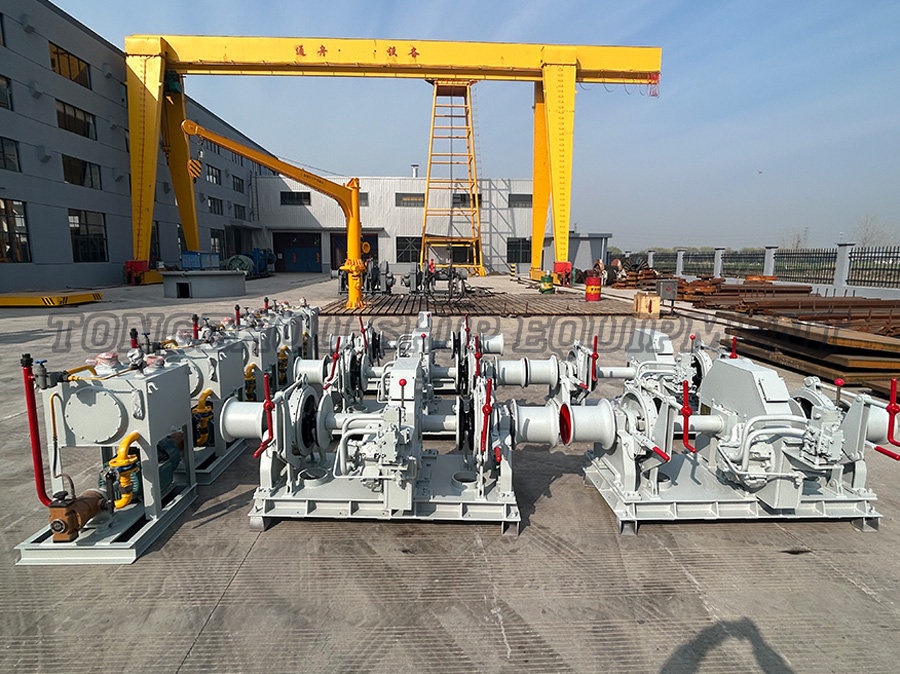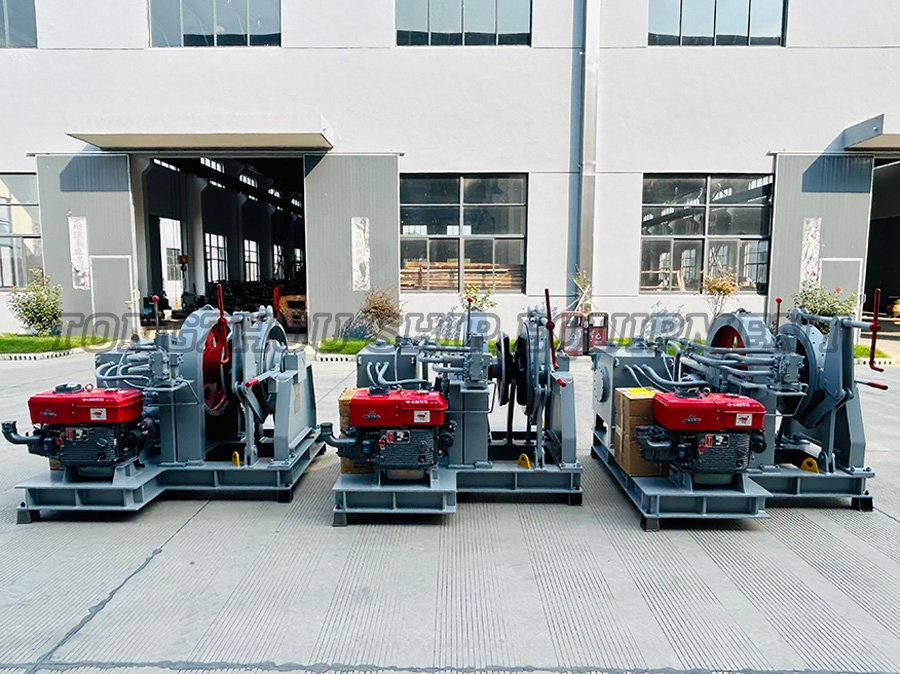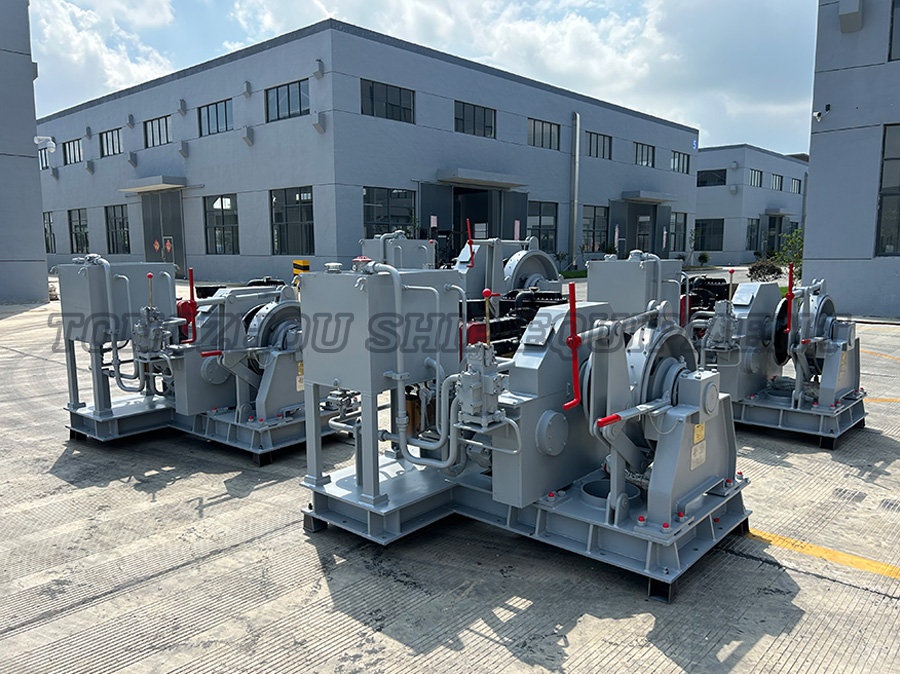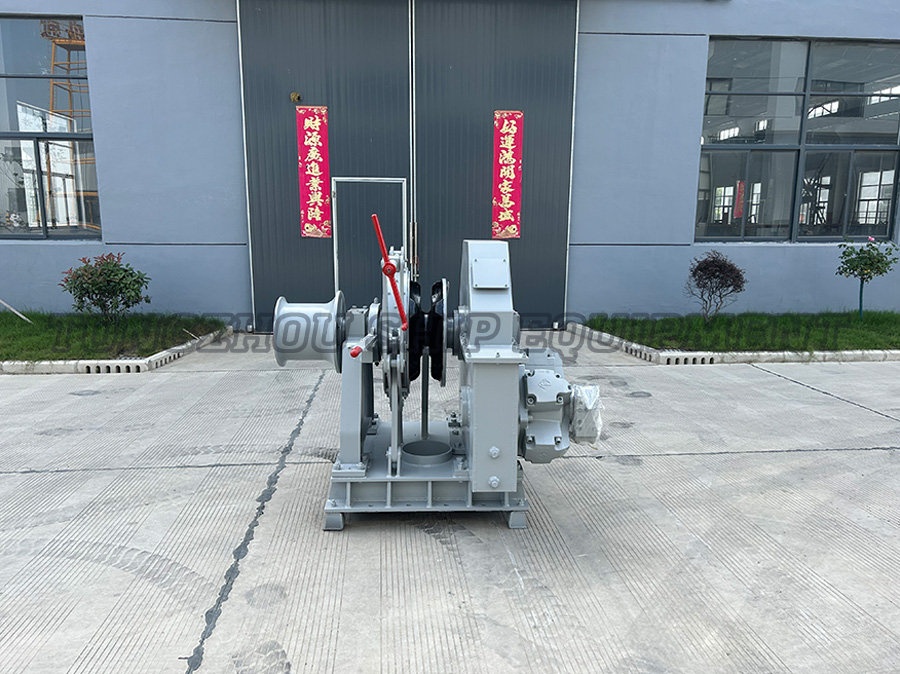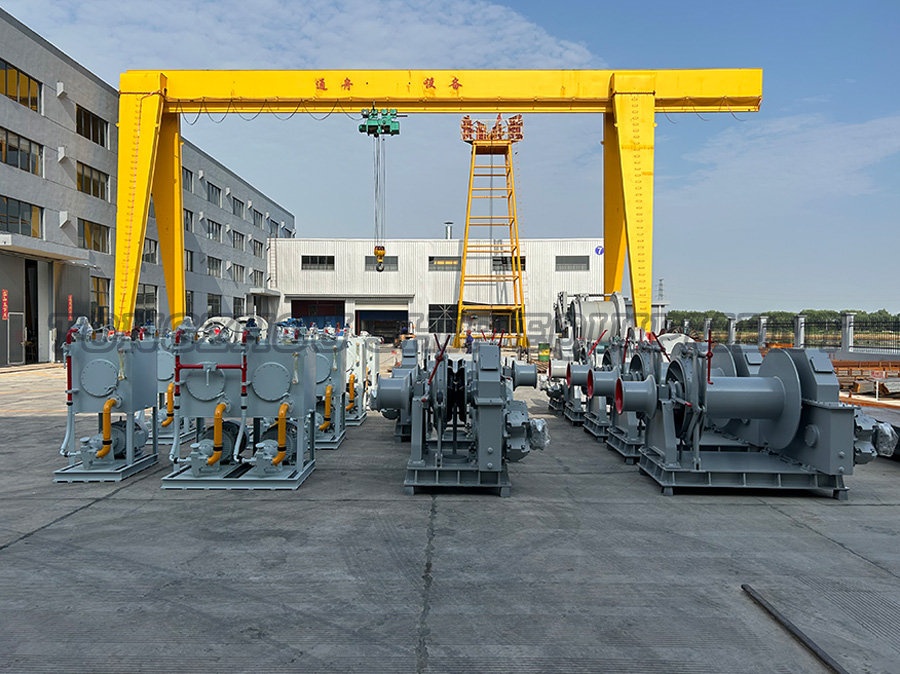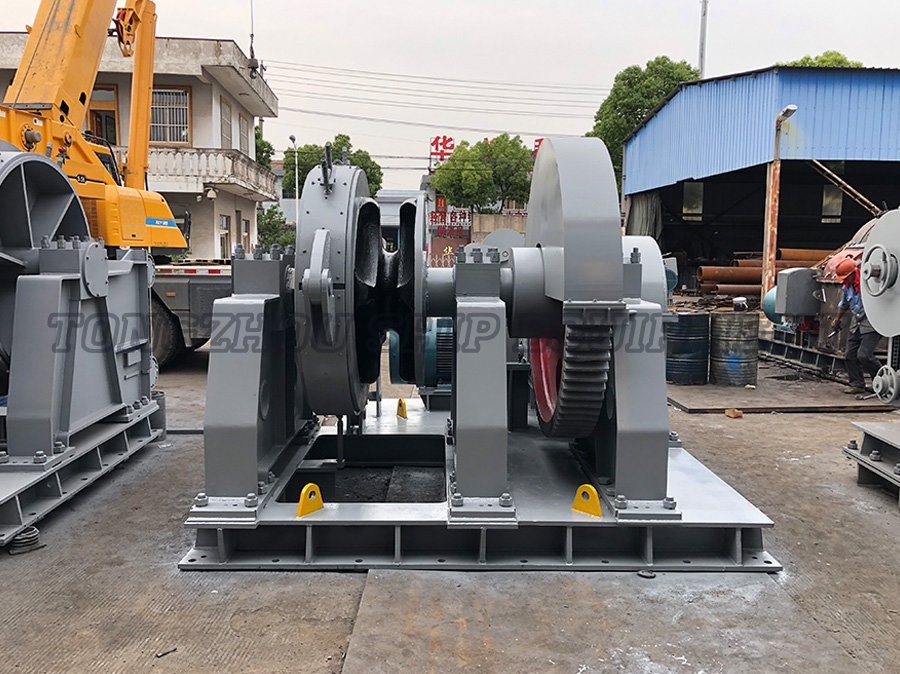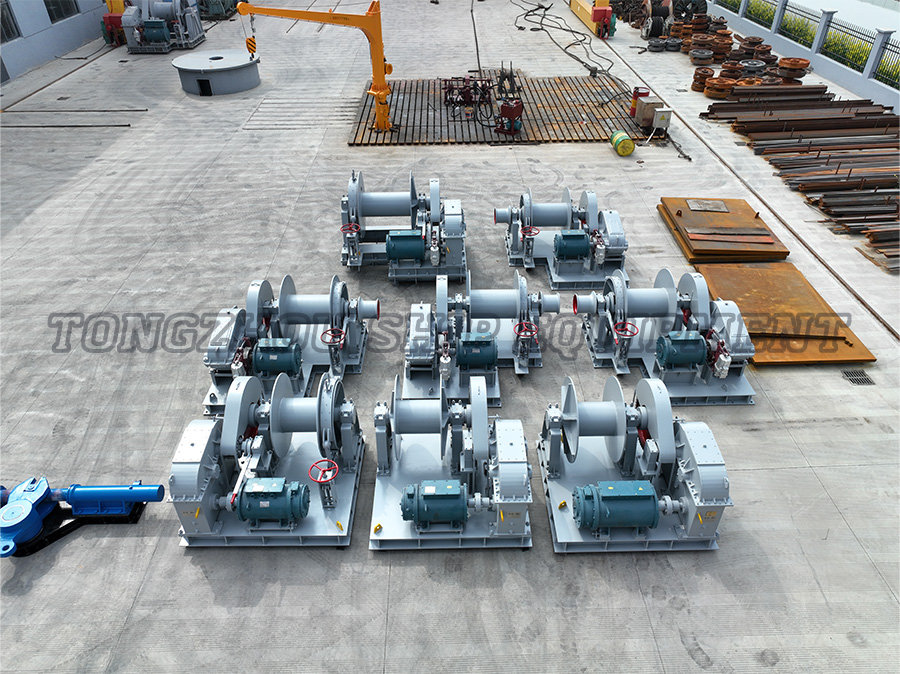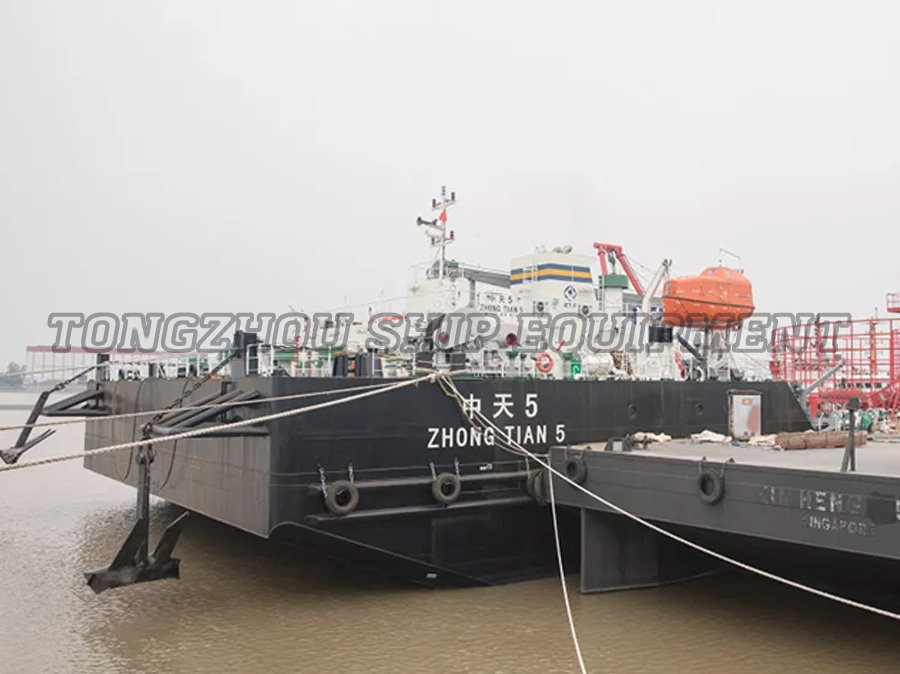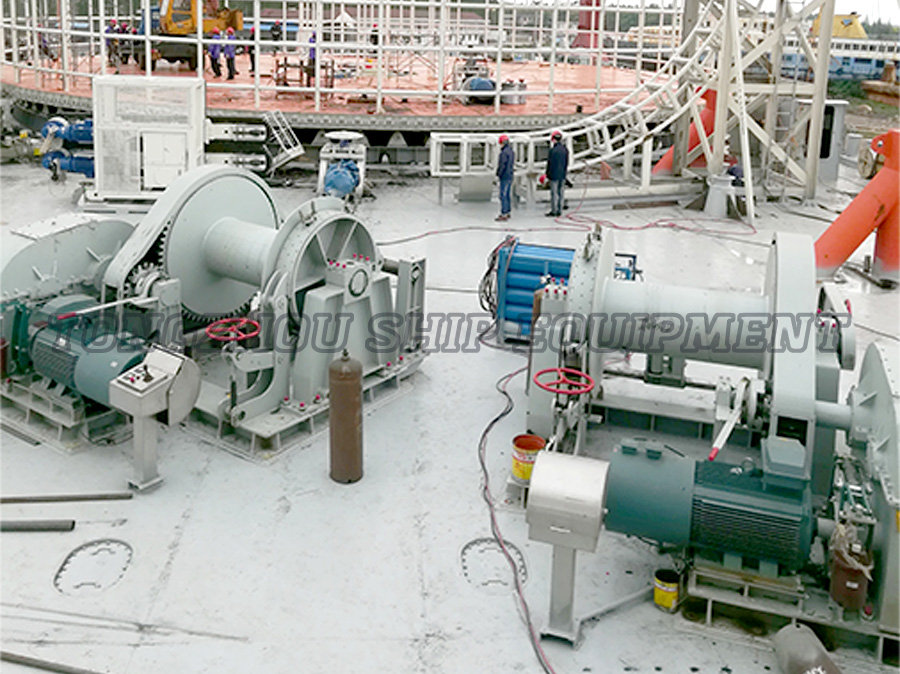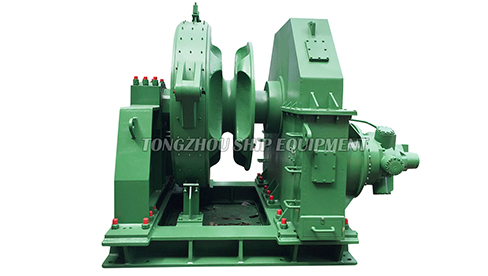
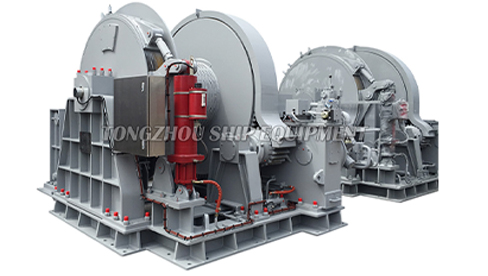
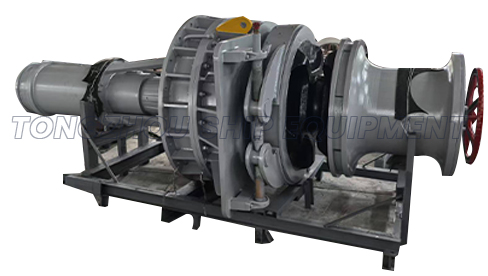


A mooring winch works by using a motorized drum to heave in, hold, and pay out the mooring lines that keep a vessel secured to a dock, berth, or offshore platform, with a brake system maintaining constant tension on those lines to counteract the continuous forces of wind, tide, and current acting on the ship. Governed by ISO Standards 3730 and 7825, as documented in the Wärtsilä Encyclopedia of Marine Technology, mooring winches are classified by their drive type (electric, hydraulic, pneumatic, or diesel), control type (automatic or manual tension), drum configuration (split or non-split, single or double), and brake design — and selecting the right combination of these factors is as critical to port safety as the winch's rated pulling capacity, which typically spans from 5 to 100 tonnes for commercial vessels.
What Is a Mooring Winch and Why Does Every Vessel Need One?
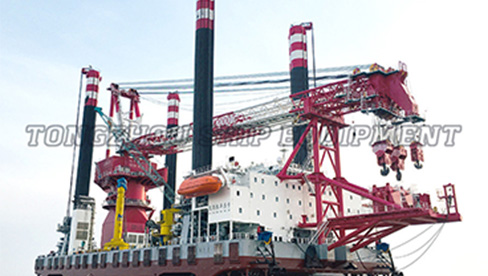
A mooring winch is a specialized deck machine designed to handle the mooring lines that connect a vessel to a fixed structure, providing precise tension control to keep the ship stable and correctly positioned regardless of changing tidal levels, loading conditions, or weather. According to Hicool Machinery, mooring winches are critical for securing and adjusting a vessel's position relative to a fixed point such as a dock or pier, and they are found on virtually every category of commercial ship, from container vessels and bulk carriers to offshore supply vessels and passenger ferries.
Without a properly functioning mooring winch, a vessel's mooring lines would need to be adjusted manually every time the tide changes or the ship's draught shifts due to cargo loading or fuel consumption. On a large container ship loading thousands of tonnes of cargo over several hours, the waterline can rise or fall by several metres — a displacement that would snap taut mooring lines or leave slack lines unable to hold the ship if the tension were not continuously managed. The mooring winch handles this automatically or at the operator's command, making it indispensable for both safety and operational efficiency.
Mooring winches are also essential in emergency situations. During severe weather conditions, mechanical failures, or unexpected current surges, a well-maintained and properly operated mooring winch provides the mechanical force needed to hold or reposition the vessel before it can swing into a berth structure, another ship, or a navigational hazard.
How a Mooring Winch Works: Step-by-Step Mechanics
A mooring winch operates through a direct chain of mechanical action: the drive unit (motor and gearbox) rotates the drum, the drum winds or unwinds the mooring line, and the brake system clamps the drum shaft to hold the line under tension once the desired position is achieved. The complete operating cycle of a mooring winch during a docking manoeuvre unfolds as follows.
- Line deployment (rendering): As the vessel approaches the berth, mooring lines are fed from the drum through fairleads and rollers to the shore. The drum rotates in the pay-out direction, releasing controlled lengths of line.
- Line securing: Once the line is made fast to a bollard ashore, the winch heaves in (reels in the line) to eliminate slack, bringing the vessel close to the desired position at the berth.
- Tension holding: With the vessel positioned correctly, the operator engages the brake to lock the drum. The brake system — typically a band, disc, or spring-applied mechanical brake — grips the drum shaft and maintains the set tension without requiring the motor to run continuously.
- Tidal compensation: As the tide rises or falls and the vessel's draught changes with cargo operations, the winch either automatically or manually heaves in or pays out small increments of line to maintain safe, consistent tension without over-stressing the line or letting the ship drift.
- Departure (unmooring): When the vessel is ready to depart, the brake is released, the motor drives the drum in the pay-out direction, the line is recovered from the shore, and the mooring line is spooled back onto the drum for storage until the next berth.
The Role of the Warping Head
Many mooring winches incorporate a warping head (also called a gypsy head or niggerhead) — a smooth cylindrical drum extension on the winch shaft used to handle lines that are not spooled directly onto the main drum. Deck crew wrap a few turns of the mooring line around the warping head and control tension manually by easing or gripping the hauling part of the line while the powered warping head provides the pulling force. This allows a single winch to handle multiple lines sequentially without each one needing to occupy a full drum position.
Key Components of a Mooring Winch System
A mooring winch system is an assembly of several interdependent components, each performing a distinct function — and the failure of any single component can compromise the integrity of the entire mooring arrangement. According to multiple marine equipment guides including Hicool Machinery and KRC Cranes, the core components are as follows.
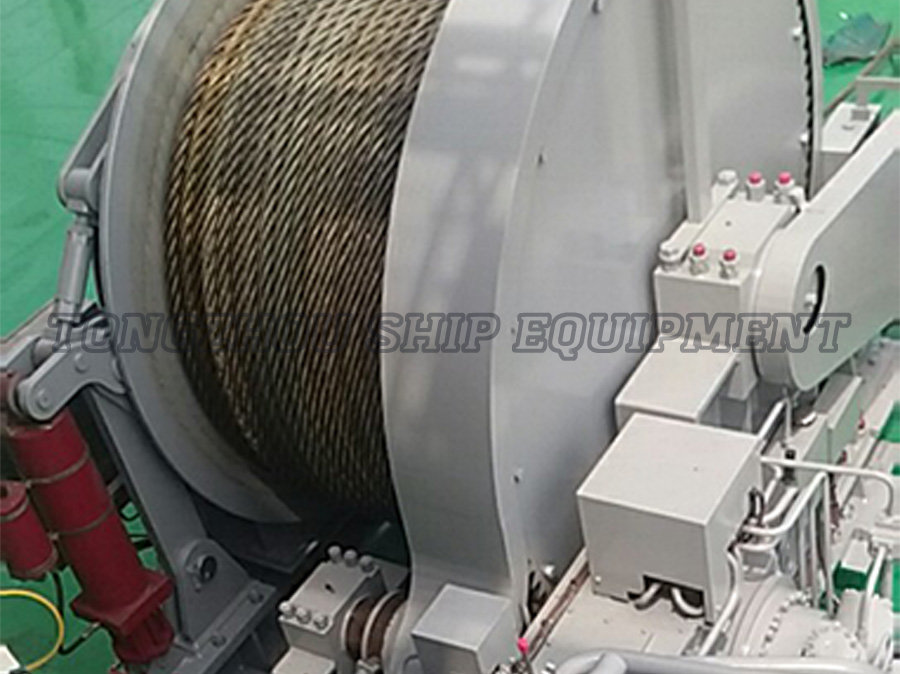
- Winch Drum: The central steel cylinder on which the mooring line (wire rope, fibre rope, or synthetic line) is wound and stored. Drum capacity determines how much line can be carried, which in turn affects the vessel's operational flexibility at berths with different bollard distances.
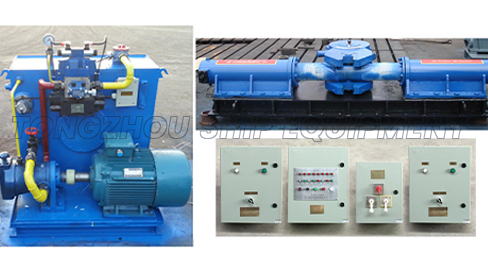
- Drive Motor and Gearbox: The motor (electric, hydraulic, diesel, or pneumatic) provides rotational power, while the gearbox reduces motor speed and multiplies torque to the level required to pull the rated line load. The motor and gearbox combination must deliver sufficient torque to heave in the mooring line against the vessel's drift force.
- Brake System: Responsible for controlling line tension and preventing uncontrolled drum rotation. Brake types include band brakes (a steel band lined with friction material that clamps the drum periphery), disc brakes, and spring-applied hydraulically released (SAHR) brakes commonly found on automatic tension winches.
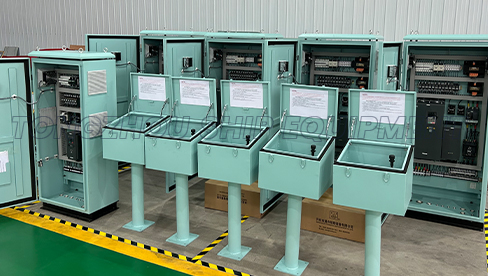
- Control Panel: Allows operators to control the winch's speed, direction, and braking force from the deck or a remote station. Modern panels include advanced features such as load monitoring systems, automatic tension control settings, and emergency stop functions.
- Fairleads and Rollers: Guide the mooring lines from the drum to the side of the ship in the correct direction, preventing excessive fleet angle on the drum and ensuring the line spools evenly across the drum width without damaging the wire or rope.
- Clutch: A manual or automatic clutch disengages the drum from the drive system when required, for example to allow free-wheeling during line deployment or to disconnect the drum during maintenance.
- Tension Monitoring System: Advanced mooring winch installations incorporate load pins, load cells, or electronic tension monitors that provide real-time feedback on mooring line tension, helping prevent overloading of lines or structural fittings and alerting crew when tension drifts outside set limits.
Which Types of Mooring Winch Are Used on Ships?
Mooring winches are classified along four independent axes — drive type, control type, drum configuration, and brake type — and the right selection depends on vessel size, available power, mooring frequency, and the degree of automation the operator requires. The Wärtsilä Encyclopedia of Marine Technology confirms this multi-axis classification framework as the industry standard.
| Classification Axis | Type | Key Characteristic | Typical Vessel Application |
| Drive Type | Electric | Clean, precise, easy to maintain; variable frequency drive enables smooth speed control | General cargo ships, ferries, naval vessels |
| Hydraulic | High torque density, robust in extreme conditions, smooth overload protection | Tankers, bulk carriers, offshore platforms | |
| Pneumatic | Intrinsically safe for hazardous areas; lower power efficiency than electric | Chemical tankers, LNG carriers, refineries | |
| Diesel | Fully independent of ship power; used where shore power unavailable | Remote anchorages, emergency mooring units | |
| Control Type | Automatic Tension (self-tensioning) | Heaves in when tension falls below set value; pays out when tension exceeds set value; recommended only for lines deployed at 90 degrees to the ship axis (Wärtsilä) | Container terminals, cruise berths with large tidal range |
| Manual Tension | Operator controls all heaving, holding, and rendering actions; required whenever a person must be present at the controls | Most commercial and naval vessels | |
| Drum Configuration | Split Drum | Divided by notched flange into a tension section and a line storage section; prevents inner layers from being crushed under high tension | Larger ships with long wire mooring lines |
| Non-Split (Undivided) Drum | Simpler construction; final turns under tension can bite into lower layers; winch must be placed at sufficient distance from the fairlead (Wärtsilä) | Smaller vessels with moderate mooring loads |
Table 1: Classification of mooring winches by drive type, control type, and drum configuration, with key characteristics and typical vessel application. Sources: Wärtsilä Encyclopedia of Marine Technology, Hicool Machinery, KRC Cranes Marine Equipment.
Electric vs. Hydraulic Mooring Winch: A Detailed Comparison
The choice between an electric and hydraulic mooring winch is the most consequential specification decision for most vessel owners, since the two drive types differ significantly in power density, operating cost, maintenance complexity, and environmental impact. According to Hicool Machinery, the lifting ratings of hydraulic winches are designed with a 5:1 safety factor and pulling ratings with a 3.5:1 factor — figures that underscore why hydraulic systems are chosen for the most demanding heavy-duty applications.
| Factor | Electric Mooring Winch | Hydraulic Mooring Winch |
| Power source | Ship's electrical distribution system | Central hydraulic power unit (HPU) or dedicated pump |
| Torque capability | Moderate; suitable for 5–50 tonne pulling capacity range | High; suitable for 20–100+ tonne pulling capacity range |
| Speed control | Precise via VFD (variable frequency drive); stepless control | Smooth and gradual via flow control valves |
| Installation complexity | Lower; cable runs only, no piping required | Higher; requires hydraulic piping, HPU, and reservoir |
| Operating cost | Lower; high energy efficiency, minimal fluid consumables | Higher; hydraulic fluid, filter, and seal maintenance ongoing |
| Maintenance | Simpler; fewer wearing components, no fluid leaks | More involved; seals, hoses, and fluid condition require attention |
| Environmental sensitivity | Zero fluid spill risk; quiet, emission-free deck operation | Hydraulic fluid leak risk; biodegradable oil options available |
| Overload protection | Via electronic motor protection and brake slip settings | Inherent via hydraulic relief valve; excellent overload tolerance |
| Best suited to | Small to medium vessels; frequent mooring operations; green ship requirements | Large tankers, offshore vessels, heavy-duty continuous operations |
Table 2: Comparison of electric and hydraulic mooring winches across torque capability, installation, operating cost, maintenance, and environmental impact. Sources: Hicool Machinery, KRC Cranes, Zava Marine, Wärtsilä Encyclopedia.
How to Select the Right Mooring Winch for a Vessel
Selecting a mooring winch requires systematically evaluating five primary criteria — vessel size and type, required pulling force, available power source, operational frequency, and classification society requirements — before comparing units from manufacturers. According to Zava Marine's buyer guidance, the vessel's size and type, the number and materials of mooring ropes, and the expected loads during operational periods all directly influence which winch can handle the workload efficiently.
- Determine required pulling capacity: Winch pulling force is typically rated from 5 to 100 tonnes. As a baseline, the nominal line pull of the mooring winch should match or exceed the bollard pull required to hold the vessel in the worst-case wind and current conditions encountered at its operating ports.
- Assess available power: Electric winches are the natural choice where the ship's electrical system has sufficient capacity. On vessels with an existing hydraulic power unit serving other deck machinery (such as cranes or hatch covers), extending the hydraulic ring main to supply mooring winches may be more cost-effective than running separate electrical power supplies.
- Choose drum configuration: For vessels mooring with wire rope under high tension, a split-drum winch is strongly recommended to prevent the outer wire layers from cutting into lower layers and causing wire damage. Non-split drums are acceptable for smaller vessels using fibre ropes at moderate loads, provided the winch is positioned far enough from the fairlead to ensure even spooling, as noted by Wärtsilä.
- Decide on control type: Automatic tension winches offer significant operational advantages at berths with large tidal ranges, but the Wärtsilä Encyclopedia explicitly recommends restricting self-tensioning winches to mooring lines deployed at 90 degrees to the ship axis, since automatic tension control on spring or breast lines at other angles can create dangerous oscillating forces on the mooring arrangement.
- Confirm classification society certification: For commercially operated vessels, mooring winches must carry type approval from the relevant classification society (such as DNV, BV, ABS, or CCS) confirming the unit meets the design and testing requirements of the applicable rules for the vessel's class and trading area.
Mooring Winch vs. Other Ship Winch Types
While the mooring winch is the most widely deployed winch type on commercial vessels, it is one of at least four distinct winch categories found on ships, each optimised for a different operational task and load profile. Understanding how mooring winches differ from anchor windlasses, towing winches, and cargo winches helps operators select and maintain the correct equipment for each function.
| Winch Type | Primary Function | Line/Chain Type | Typical Speed | Vessel Type |
| Mooring Winch | Secure vessel to berth; control line tension during tidal change | Wire rope, HMPE or polyester fibre mooring lines | ~10–15 m/min heaving speed | All commercial vessel types |
| Anchor Windlass (Anchor Winch) | Deploy and recover anchor chain; hold vessel at anchor | Stud-link anchor chain | ~10 m/min | All vessels with anchors (typically bow) |
| Towing Winch | Tow other vessels, barges, or offshore structures | Tow wire (steel wire rope, large diameter) | ~10 m/min under load | Tugboats, anchor-handling vessels |
| Cargo Winch | Lift and lower cargo via derricks; hatch cover handling | Steel wire rope (cargo runner) | Variable; precision control required | Bulk carriers, general cargo ships |
| Tugger Winch | Handle lightweight lines, position equipment; auxiliary deck tasks | Fibre or wire line, smaller diameter | Variable | Offshore platforms, large cargo ships |
Table 3: Comparison of the five main ship winch types by primary function, line type, typical heaving speed, and vessel application. Sources: KRC Cranes, PT Goutama Weight and Testing, Hicool Machinery.
Mooring Winch Maintenance Best Practices
Regular maintenance of mooring winches is a direct safety requirement, since a snapped mooring line or a slipping winch brake can lead to catastrophic vessel breakaway, structural damage, or crew injury — consequences that proper upkeep reliably prevents. PT Goutama Weight and Testing emphasizes that a failing ship winch is a major safety hazard, making systematic maintenance non-negotiable for any commercially operated vessel.
- Lubrication: All moving parts, including drum bearings, gearbox internals, brake linkages, and fairlead rollers, must be lubricated at intervals specified by the manufacturer. Dry bearings and linkages accelerate wear and can cause seizure under load.
- Brake lining inspection and adjustment: Brake band linings or disc brake pads wear progressively. Brake holding capacity must be tested against the winch's rated line pull to confirm it meets the minimum brake holding force required by classification society rules, and linings must be replaced before they reach minimum thickness.
- Wire rope and line inspection: Mooring lines must be checked regularly for broken wires, fraying, kinking, or bird-caging. Damaged sections must be cut out or the entire line replaced, since a compromised line can part at a fraction of its rated breaking strength under dynamic shock loading.
- Hydraulic system servicing: For hydraulic mooring winches, hydraulic fluid condition and level must be monitored, filters changed at scheduled intervals, and all hose connections and seals inspected for leaks. Contaminated hydraulic fluid is a leading cause of hydraulic motor and valve failure.
- Control system testing: Emergency stop functions, automatic tension set-points, and remote control operation should be tested periodically to confirm they operate correctly before the winch is needed in a real mooring emergency.
- Drum and spooling checks: Mooring lines must spool evenly over the drum surface without crossing or overlapping in a way that causes uneven pressure on lower layers. Lines that spool incorrectly should be respooled under controlled tension before the next mooring operation.
Frequently Asked Questions About Mooring Winches
Q: What is the difference between a mooring winch and a mooring capstan?
A mooring winch stores the mooring line on a horizontal drum, allowing the entire working length of the line to be wound on and off as needed. A capstan is a vertical-axis rotating cylinder that does not store the line itself — the line is passed around the capstan by deck crew who control tension by gripping the hauling part, and the line must be separately coiled or cleated once the desired tension is achieved. Capstans are typically used for lighter duties or where space prevents a larger drum winch from being installed, while mooring winches are the standard solution for ships where the full mooring line must be safely stored on board.
Q: Why are automatic tension mooring winches restricted to lines at 90 degrees to the ship axis?
The Wärtsilä Encyclopedia explicitly states that the use of self-tensioning winches is not recommended except for mooring deployed at 90 degrees to the ship axis. This restriction exists because automatic tension control on spring lines (running fore and aft at shallow angles) can create a feedback loop: as the ship surges forward or aft, the self-tensioning winch heaves in or pays out to restore preset tension, which can generate oscillating forces that amplify rather than dampen the ship's movement. On lines deployed at 90 degrees (pure breast lines), this risk does not arise since the line's geometry means the winch response directly opposes lateral drift without influencing longitudinal motion.
Q: What pulling capacity range do mooring winches cover?
Commercial mooring winches are typically rated by nominal pulling force from as low as 5 tonnes for small coastal vessels up to 100 tonnes or more for large tankers and bulk carriers, according to Zava Marine's classification by capacity. The rated pulling force is the sustained load the winch can exert while heaving in under power; the brake holding force, which is the static load the engaged brake can hold without the drum slipping, is a separate rating that must equal or exceed the maximum expected line tension at the berth.
Q: What is a split-drum mooring winch and why is it preferred on larger ships?
A split-drum mooring winch has its drum divided by a notched flange into two sections: a tension section that holds only the working turns of line that are kept under load, and a storage section that holds the reserve length of line at low or no tension. This design solves a problem specific to wire rope mooring lines — when many turns of wire are held under tension on an undivided drum, the outer layers under full working load compress and bite into the inner layers, potentially damaging the wire and creating difficulty in releasing it. The split-drum design keeps only a few working turns under tension, dramatically reducing crushing load on the wire. For fibre rope mooring lines, which are more tolerant of compressive loads and tend to be used on smaller vessels, a non-split drum is generally acceptable.
Q: What are the key trends shaping the future of mooring winch technology?
Three trends are reshaping mooring winch design, according to maritime industry overviews. First, automation and remote control: systems that allow mooring operations to be performed from a bridge control console or even remotely from shore are becoming more prevalent, reducing the number of deck crew exposed to the hazards of mooring lines under load. Second, advanced materials: high-strength alloys and composites are making winch components lighter and more corrosion-resistant without sacrificing structural capacity. Third, environmental considerations: the shift toward electric mooring winches aligned with ship electrification programmes, and the development of biodegradable hydraulic fluids for hydraulic winch systems, reflects growing regulatory pressure to reduce the maritime sector's environmental footprint even in deck machinery.
Q: Can a single mooring winch handle multiple mooring lines at once?
A single mooring winch drum handles one mooring line at a time, but many vessels are fitted with double-drum or triple-drum mooring winches in which two or three drums are mounted on a common frame and driven by the same power unit, either simultaneously or independently. Double-drum winches are commonly found on oil tankers, container ships, and cruise liners where the need for quick and secure mooring using multiple simultaneous lines is paramount, according to industry guides. The warping head fitted to many winches also allows the handling of additional lines sequentially using the same power unit without a dedicated drum for each line.
Summary
A mooring winch is far more than a simple rope-winding machine — it is a precisely engineered safety system whose drum, brake, motor, gearbox, and control panel must work together reliably every time a vessel berths or departs, often in adverse weather and under time pressure. Governed by ISO Standards 3730 and 7825 and certified by classification societies including DNV, BV, and ABS, mooring winches span a capacity range from 5 to over 100 tonnes of pulling force and a technology spectrum from simple manual hydraulic drums to fully automatic self-tensioning electric systems with real-time tension monitoring.
Whether the decision comes down to the precision and low operating cost of an electric drive for a container ship or the raw torque and overload tolerance of a hydraulic unit for an offshore platform supply vessel, the fundamentals remain constant: match the winch's pulling force to the worst-case environmental load, choose a drum configuration appropriate for the line type, follow the manufacturer's maintenance schedule rigorously, and ensure every crew member who operates the winch understands both its capabilities and its limitations. A well-specified, properly maintained mooring winch is the foundation of every safe port call.